Showing posts with label Khmer food. Show all posts

Tuesday, January 14, 2020

Khmer Pickled Papaya

Pickled papaya or chrourk la’hong is probably the most popular pickle in Cambodia. It is served as an accompaniment to Khmer grilled beef skewers. If you ever find yourself in Cambodia, try our beef skewers. It’ll be the best thing you’ll ever eat (assuming the cooks know their stuff). We also top our sandwiches with this pickle. You can serve it along with grilled meat and seafood as well. Before we get started, a brief Khmer lesson:

Chrourk means pickle in this instance. It can also mean to sour. 

La’hong is papaya.


Now to the pickle, you will need:

1 large young green papaya, peeled and seeded

2 medium carrots, peeled 

4 cucumbers, halved and seeded

6 garlic cloves, peeled and thinly sliced

Several chilies (optional)

3 tbsp salt

1 cup white sugar

1 cup white vinegar

Shred the papaya. Make sure not to shred it too finely. Toss the shredded papaya with 2 tbsp of salt. Set it aside for forty minutes. Slice the carrots, about 1/16 inch in thickness. You can also shred it as you did the papaya. Toss the carrots with ½ tbsp of salt and set aside for forty minutes. Cut cucumbers into matchsticks, roughly around 1 ½ inch long and ⅛ inch thick. Toss the cucumbers with the remaining salt and set aside for forty minutes. 

Dissolve sugar in vinegar. 

Drain the salt water off of each vegetable. Make sure you get as much salt water as possible. Do not rinse the vegetables with water. Toss the vegetables with garlic slices and chilies in a large bowl. Add the vinegar and sugar solution. Mix well, cover and leave it aside for an hour or so. Toss it a few times so that the brine is distributed evenly. Move the pickle into a clean jar. Do not add in the brine. You want the pickle to stay fresh and crunchy. Store the pickle in the fridge. It can be eaten the next day. It you want a sourer taste, leave the jar on the counter for a few days before moving it into the fridge. 

Note: If you like, you can add daikon radish and cabbage to the veggie medley as well.

Saturday, January 26, 2019

(Khmer) Kampot Noodles

Khmer Noodles
Did you know that noodles originated in Cambodia? Well, according to the Khmer legend of Dhmen Jay, noodles were introduced to China around the start of the Common Era. Along with noodles, Dhmen Jay (also spelled Thoun Chey) introduced kites to China as well. But I want to talk about Khmer noodles today. If you followed that link about and read the article, you’d know that num banh chok is a fermented rice noodles. Making num banh chok is a very laboring work, as you can tell from that article.
I’m not certain of the age and provenance of num banh chok, but my third grade teacher’s family claimed to have been making Khmer noodles for more than a thousand years. And there are many villages all over Cambodia that have claimed the same. I’ve heard that there are a few areas in Kampong Thom and KratiĆ© provinces that have been making num banh chok for more than two millennia.
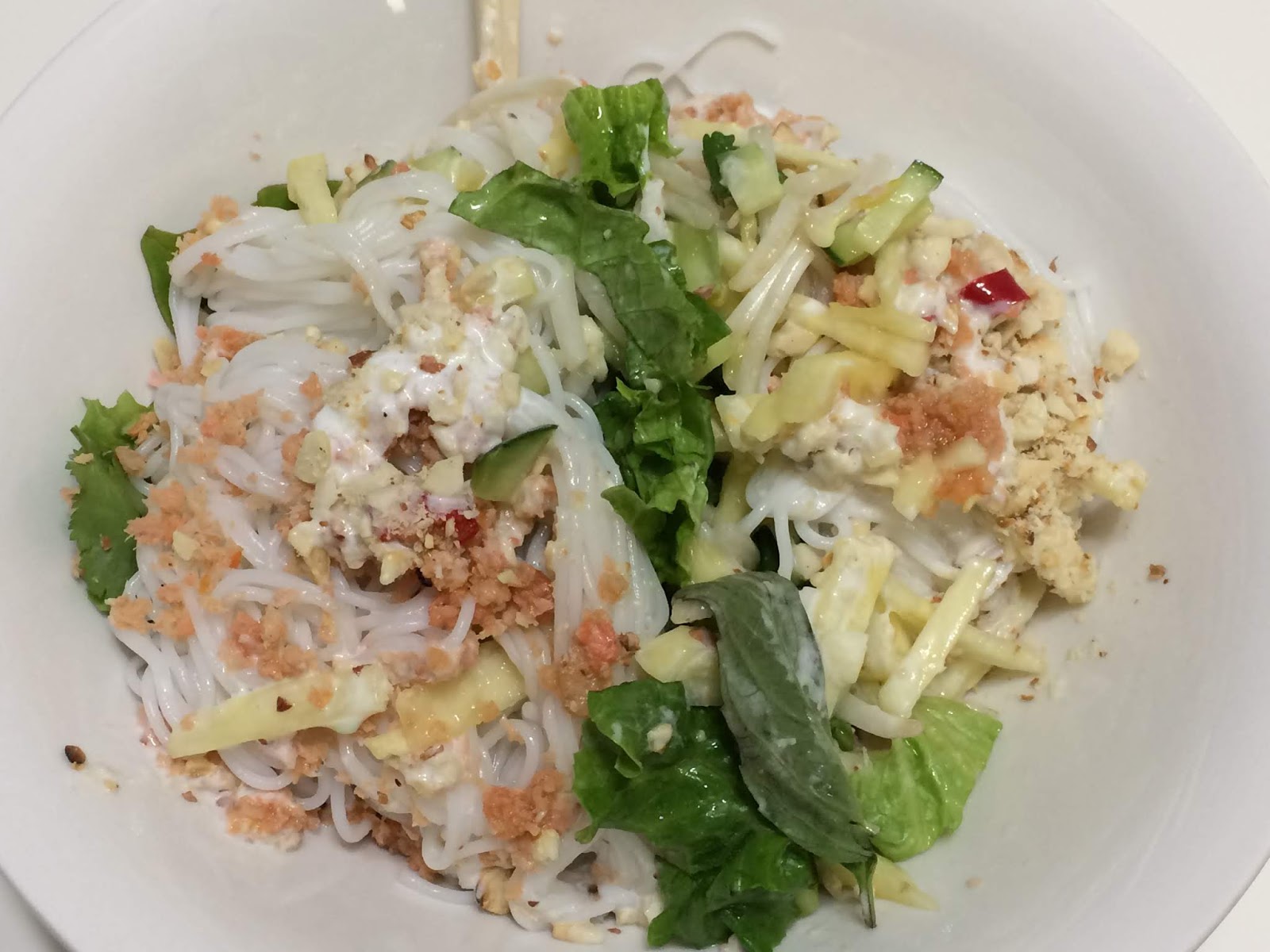
Whatever the claim, Khmers love num banh chok, which is also the name of the dishes made with these noodles. Today, I am introducing you to one of the dishes. Num banh chok kampot is a dish of noodles served with crushed dried shrimp tossed with pineapple fish-sauce dressing and topped with roasted peanuts and coconut cream. 
Kampot is a coastal province, which explains the use of dried shrimp. Kampot fish sauce is considered to be the best in the nation. The same goes for agricultural products grown in the province, such as peppers, durians, rambutans and pineapples.

Without further ado:

Num Banh Chok Kampot

1 lb. fresh num banh chok, or 1-8 oz package of rice vermicelli

1 ½ cups dried shrimp

½ cup coconut cream

½ cup roasted peanuts, roughly crushed

½ small head of lettuce, torn to bite-sized pieces

2 cucumbers, julienne  

2 cups bean sprouts, trimmed

A handful of herbs (mints, basils, etc.)

A handful of young mango leaves (optional)

Pineapple Fish-Sauce Dressing

¼ ripe pineapple, julienne

½ cup fish sauce

½ cup lemon juice

½ cup sugar

5 garlic cloves

1 bird's eye chili (optional)

Preparing the dressing: pound the garlic and chili in a mortar. Spoon out and place the garlic/chili mixture in a bowl. Add the remaining ingredients, mix well. Taste and adjust accordingly. You can either add in the pineapple at this time or you can wait until you assemble the dish.

If using dried rice vermicelli, prepare it according to the direction on the package.

Soak the shrimp in warm water for 20 minutes. Rinse them several times and drain. Pound the shrimp in a mortar with pestle until they become crumbly. Conversely, you can use a food processor.
Dried Shrimp
To assemble the dish: in a bowl, add all the trimmings, noodles, some pineapple slices, and shrimp. Add some fish-sauce dressing and coconut cream. And top everything with crushed peanuts. Enjoy!
Kampot Noodles


Sunday, September 23, 2018

Banana Blossom Salad


Ngiom Trayong Chek in Khmer

1 large banana blossom (about 1 ½ lb)

Juice of one lemon
12 oz. chicken breast or pork belly or 1 lb shrimp, boiled
8 oz. bean sprouts, trimmed  
1 small bell pepper, seeded and julienne (preferably red or orange)
A handful of basil leaves
A handful of mint leaves
⅓ cup Khmer fish-sauce dressing
¼ cup roasted peanuts, coarsely crushed
Fill a large bowl with cold water. Add lemon juice. Remove and discard several
outer layers of the banana blossom along with the undeveloped bananas. Keep
removing the layers until you reach the heart. Do not throw away these layers.
Cut the heart in half lengthwise and cut into very thin slices. Places the slices in
lemon water as you work. Stack the removed layers and roll them like a cigar
and cut into very thin strips. Again add them in lemon water to prevent
discoloration. Leave it aside.
If using chicken breast, shred it with your fingers.
Drain the banana blossom. Make sure you squeeze out as much water as
possible. In a large bowl, toss the banana blossom, bean sprouts, bell pepper,
shredded chicken, basil and mint leaves together. Add the dressing
and toss again. Top with crushed peanuts and serve.  
Khmer Fish-sauce dressing
½ cup fish sauce
½ cup lemon juice
½ cup sugar
6 cloves of garlic, finely chopped
1 bird's eye chili, chopped (optional)
Mix everything together. Taste and adjust accordingly.
Note: in Cambodia we only use leaves/blossoms/fiber from pisang awak
banana. Pisang awak is the most versatile variety. The blossoms are bland
and the leaves don’t leave a bitter aftertaste.  

Tuesday, September 4, 2018

Num Krok: An Ugly Cake


Num krok is a popular street snack in Cambodia. It is a coconut and green onion cake. The cake is served with a Khmer fish-sauce dressing and a dose of coconut cream. There’s a lot of coconut in this cake. But first, a brief Khmer lesson:

Num = cake, and after the French arrived in the mid-19th century, it also refers to any western treat that is made with flour. i.e., num pang is bread.

Krok = homely or drab, and it refers to the ugly appearance of the cake’s top. To hide that ugliness, two cakes are joined together face to face into a ball shape.

Num krok is cooked in a special terracotta clay pan. The pan has half-spherical molds. Amazon carries a cast iron version. I use a takoyaki pan because that’s what I have. You can also use poffertjes pan if that is what you have at hand. Remember, you’ll get a slight difference in texture when you use a cast iron pan than if you use a terracotta clay pan.

Batter
2 cups rice flour
2 cups glutinous rice flour
5 cups coconut milk
⅔ cup water
1 cup cooked rice (I used leftover rice)
1 cup sliced green onion, green part only
Enough lard to brush the pan

Fish-sauce dressing
½ cup fish sauce
½ cup sugar
½ cup lemon juice
⅔ cup coconut water
6 cloves of garlic, finely chopped
1 tsp finely chopped galangal (optional)
1 chopped bird-eye chili (optional)
⅔ cup coconut cream

Dressing: In a jar or bowl, mix fish sauce, sugar, lemon juice, garlic, galangal (if using) and chili (if using) together until the sugar is dissolved. Add coconut water. Mix, taste and adjust accordingly. Leave it aside for a few hours. Strain the dressing. You only need the liquid. You can throw away the solid.

Batter: In a food processor, add water and rice and process until smooth. In a large mixing bowl, add rice flour, glutinous rice flour and coconut milk and mix until smooth. Add in the rice/water mixture and green onion and mix until no clumps remain.

Heat the pan over medium low heat. When it’s hot, brush each mold with lard. Pour the batter to fill the molds. Let the cakes cook until the tops are almost firm and the outside are crispy and slightly brown. Carefully with a spoon, flip one on top of another to make a ball. Let each ball cook a minute more. Make sure to rotate each side of the ball once. When they are done, take the cakes out with a spoon. Brush the molds with lard and continue with the rest of the batter. Keep brushing the molds before you pour in the batter.


To serve: Place several cakes in a small bowl, add some dressing and top them with a teaspoon or two of coconut cream. Mix and enjoy. It’s best to serve them warm.
Note: if you don’t quite like the strong coconut taste, you can cut down the amount of
coconut milk in the batter. Just replace it with water instead.


Monday, March 12, 2018

Khmer Fish Salad or Pleah Trey


1 pound whitefish fillets such as tilapia or cod, halved and thinly sliced

Juice from 6 limes

1 medium shallot, thinly sliced

3 garlic cloves, finely chopped
2 lemongrass stalks, very thinly sliced
A small piece of galangal root, finely chopped
1 red chili, chopped (optional)
Zest of 1 kaffir lime (see note)
½ tbsp prahok paste (see note)
¼ cup fish sauce
⅛ cup sugar
1 small head of green lettuce, torn into bite size pieces
½ red bell pepper, julienned
½ carrot, julienned (optional)
1 cup bean sprouts
1 cup shaved banana blossom
A bunch of mint leaves
A bunch of basil leaves
A few culantro leaves, torn into bite size pieces (optional)
¼ cup roasted peanuts, crushed
Marinating the fish: combine lemongrass, shallot, garlic, galangal, lime
juice, lime zest and chili in a bowl and mix. Add the fish to the lime
mixture and toss well. Cover and leave to marinate at room temperature
for 40 minutes.

Making the dressing: pour away the marinade juice from the fish, gently
pressing with your hands to remove as much juice as
possible, reserve the juice. Return the fish to a clean bowl
and leave it aside.
In a small saucepan over medium heat, mix the reserved juice, fish
sauce, sugar and prahok paste and bring the mixture to a boil.
Let it completely cool down.

Preparing the salad: in a big bowl, toss together the fish, lettuce, carrot
(if using) sprouts, bell pepper, banana blossom and herbs. Add the
dressing and toss it again. Taste and adjust accordingly. Sprinkle with
peanuts and serve.


Note: prahok is a fermented fish paste. It’s a very essential seasoning in Khmer cuisine. Kaffir lime zest can
be substituted with kaffir lime leaves
or normal lime zest. Also, as the fish is cooked in lime-marinade, make
sure to use fresh fish.
The dressing has to be completely cooled down so that the herbs and
vegetables stay fresh and crunchy.  

Monday, January 1, 2018

Khmer Beef Salad or Pleah Saiko

Pleah saiko is a beef salad. It’s mostly beef, with some bean sprouts and herbs tossed in. The beef is cooked in a lime-marinade mixture. The beef becomes very tender after it’d been marinated for a few hours, but if you are pressed for time, 30 minutes is enough. Also, try this with goat or deer meat and let the meat marinate for two to three hours.
Pleah Saiko

Khmer Beef Salad or Pleah Saiko
1 pound boneless top round steak, trimmed of all fat and thinly sliced against the grain
Juice from 6 limes
3 cloves of garlic, finely chopped
3 large shallots, thinly sliced
2 lemongrass stalks, thinly sliced
Zest of 1 kaffir lime (see note)
A bunch of mint leaves
A bunch of basil leaves
6 oz. bean sprouts
1 red chili, finely chopped (optional)
¼ cup fish sauce
¼ cup water
5 tbsp. sugar  
½ tsp prahok paste (see note)  
¼ cup roasted peanuts, roughly ground

Making the dressing: in a small sauce pan over medium heat, mix fish sauce with prahok paste, water and sugar and bring the mixture to a boil. Let it completely cool down.

Marinating the beef: combine lemongrass, garlic, kaffir lime zest, shallots, lime juice and chili (if using) in a bowl and mix. Add the beef to the lime mixture and toss together well. Cover and leave to marinate at room temperature for 30 minutes or up to 3 hours.

Preparing the salad: pour away the excess marinade juice from the beef, gently pressing with your hands to remove as much liquid as possible. Return the beef to a clean bowl and add bean sprouts, mint and basil leaves and toss well. Add the dressing and toss again. Taste and adjust accordingly. Sprinkle with peanuts and serve.
  
Note: prahok is fermented fish paste. It is the soul of Khmer cuisine. Prahok is used as seasoning in a lot of our dishes. You can leave it out of this dish, just make sure you adjust the dressing accordingly. Kaffir lime zest can be substituted with kaffir lime leaves or normal lime zest. Also, as the beef is cooked in lime-marinade, make sure to trim all the fat out. And the dressing has to be completely cooled down so that the herbs and sprouts stay crunchy and fresh.

Sunday, December 31, 2017

Num Kom and Fertility

Num kom is a Khmer cake wrapped in banana leaves in a pyramid shape. It is made with glutinous rice flour and has coconut, palm sugar, and black sesame seeds filling. Khmers usually serve num kom as a dessert at big gatherings. But num kom also has a religious connotation; it is a representation of the yoni (vulva, womb), a personification of the divine feminine creative power. If you know your Hinduism, you’d know that the yoni is the counterpart to the linga, which is the mark of Lord Shiva. So of course, num kom has its own counterpart, num ansom which represents the linga. At engagement and wedding ceremonies, num kom and num ansom are always presented together to symbolize the union of the linga and the yoni, the representation of the eternal process of creation and regeneration, the union of male and female principles. In Khmer that union is called mea ba. Num ansom and its meaning will be covered in a future post.
Num Kom
16 oz. grated coconut (I used frozen coconut, thawed)
8 oz. palm sugar
1 oz. black sesame seeds, roasted
A generous pinch of salt
12.3 oz. glutinous rice flour (about 3 cups)
1 ½ cups warm water
Banana leaves for wrapping

Prepare the filling: heat a pan over low heat. Add palm sugar and cook until the sugar is dissolved. Add the grated coconut and salt. Simmer until the coconut becomes sticky and has absorbed all the sugar. Remove from heat, sprinkle with sesame seeds and allow it to cool. Make small balls of the mixture, about 1 tbsp. size. You’ll get about 24 to 27 balls.

Make the dough: place the rice flour in a mixing bowl and add warm water and mix until it resembles smooth workable dough that is not too wet and can hold its shape. If it crumbles, it’s too dry, just add a bit more water. If it is too soft, add a few pinches of flour. Cover the dough with plastic wrap to prevent it from drying out.

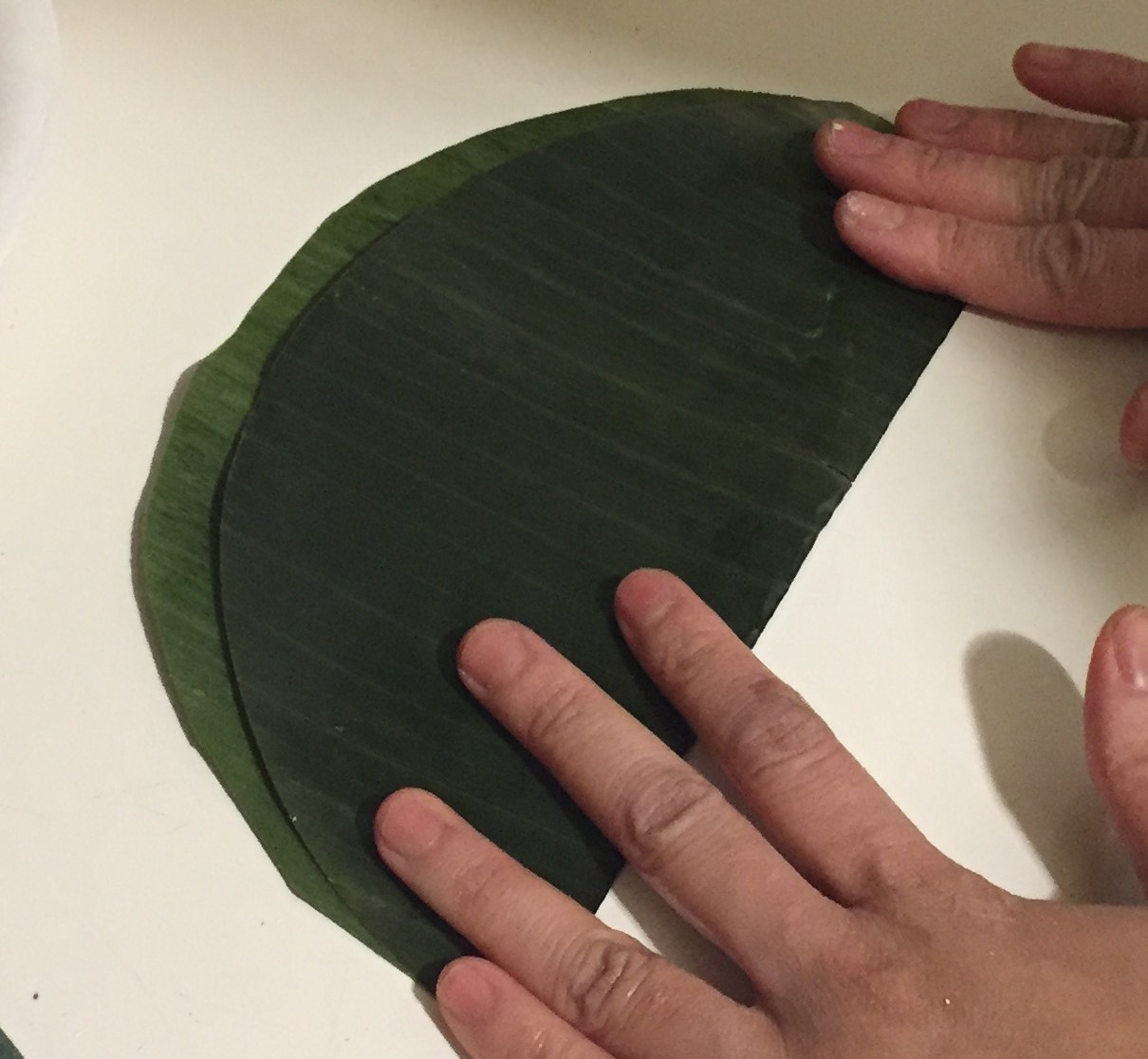
Prepare the banana leaves: cut the banana leaves into round shapes of 9 inch diameter. Grease the leaves with flavorless oil. And bring a big pot of water to a boil.

To assemble the cakes: take a piece of dough, about 1 tbsp. and roll it into a ball. Place each ball of dough on the palm of your hand and lightly flatten the ball. Place the filling in the center and bring the edges of the dough up over the filling and seal the ball by pinching the sides together. Roll it into a ball. Repeat with the rest of the dough.

To wrap the cakes: follow these pictures below 


Steam the cakes for 20 minutes.

Sunday, October 1, 2017

Cambodian Grilled Corn


Grilled Corn with Sweet Coconut Glaze 
1 cup coconut cream
1 tsp fish sauce
2 tbsp. palm sugar 
1 tbsp. water
A few pinches of salt
2 green onions, thinly sliced
6 corn
Combine coconut cream, water, sugar in a saucepan over low heat. Cook for about 4 minutes, stirring until the sugar has dissolved. Add green onions and remove it from the stove. Let it cool.
Grill the corn according to your preferences. Start basting them with the glaze after a few minutes. And continue basting them a few more times during grilling. When the corn are done, baste them one more time. Serve them warm.
Grilled Corn with Sweet Glaze
2 tbsp. vegetable oil
2 green onions, thinly sliced
1 tbsp. water
1 tbsp. granulated sugar
1 tsp fish sauce
A few pinches of salt
6 corn
Heat the oil in a small pan over high heat. Add the remaining ingredients and stir-fry about 30 seconds. Let it cool.
Grill the corn according to your preferences. When the corn are done, brush the glaze over the hot corn and serve.

Monday, August 14, 2017

Khmer Mango Salad

Continued from yesterday’s post about Khmer salad dressing, here’s another salad:

Mango Salad or Ngiom Svay in Khmer
1 large green mango, julienned
1 small carrot, julienned (optional)
3/4 lb. boiled shrimp, peeled
4 large shallots or 1 medium red onion, thinly sliced
A bunch of mint leaves
A bunch of basil leaves
¼ cup roasted peanuts, roughly ground
¼ cup fish-sauce dressing
Toss mango, carrot (if using), shrimp, shallots, mint and basil leaves together. Add the dressing and toss again. Sprinkle with peanuts and serve.
Note: Southeast Asian markets usually carry young green mangos. If you have one in your neighborhood, try there. If not, you can use those large mangos found in most western markets. Pick the hardest ones possible. Those mangos usually taste sweeter than the green ones. If you prefer a tarter taste, add extra lemon/lime juice to your salad.

Mango salad is the most loved of all Khmer salads. We make it with all kind of protein, from smoked fish to dried shrimp to pork belly to fresh seafood. Try it with a combination of pork belly and shrimp. 
Khmer Mango Salad

Sunday, August 13, 2017

Khmer Salad Dressing

Fish-sauce dressing
5 garlic cloves
3 red chilies (optional)
½ cup fish sauce
½ cup lemon juice
½ cup sugar
A pinch of salt
Pound the garlic and chilies in a mortar. Spoon out and place the garlic/chili mixture in a bowl. Add the remaining ingredients, mix well. Taste and adjust accordingly.

Note: Except for beef and fish salads (the pleah variety), this fish-sauce dressing is used in majority of Khmer salads (ngiom) and a few relishes (chrourk). You can also use it as a dipping sauce for boiled/broiled seafood. Drizzle some fish-sauce dressing over broiled or deep-fried whole fish and serve it with some sliced cucumbers and tomatoes.
To start, here's a very popular salad:

Cambodian Cabbage Salad
Cambodian Cabbage Salad or Ngiom Spai Kdaob in Khmer
1 cabbage, about 2 pounds, quartered and thinly sliced
3/4 pound boiled chicken breast, shredded
1 medium carrot, thinly sliced into matchsticks
4 medium shallots, thinly sliced
3 oz bean thread soaked in hot water for 30 minutes and drained (optional)
1 red or orange bell pepper, thinly sliced (optional)
A bunch of mint and basil leaves
1/3 cup of roasted peanuts, roughly ground
1/3 cup fish-sauce dressing
In a large bowl, toss everything together, setting aside the peanuts and the dressing. When you’re ready to eat, toss the salad with the dressing and sprinkle with peanuts and serve. 

Note: The traditional recipe calls for chicken, but you can also make it with boiled pork belly or shrimp or a combination of all three.

Another salad, with apples as the main star:

Apple Salad
Apple Salad or Ngiom Pomme in Franco-Khmer
3/4 lb. boiled shrimp, peeled
3 large Granny Smith apples, julienned
3 medium shallots, or 1/2 red onion, thinly sliced
Some mint leaves
Some basil leaves
¼ cup roasted peanuts, coarsely ground
¼ cup fish-sauce dressing
Toss apples, shallots, shrimp, mint and basil leaves together. Add the dressing and toss again. Sprinkle with peanuts and serve.

Note: Use crunchy apples, the sourer the apples, the better.